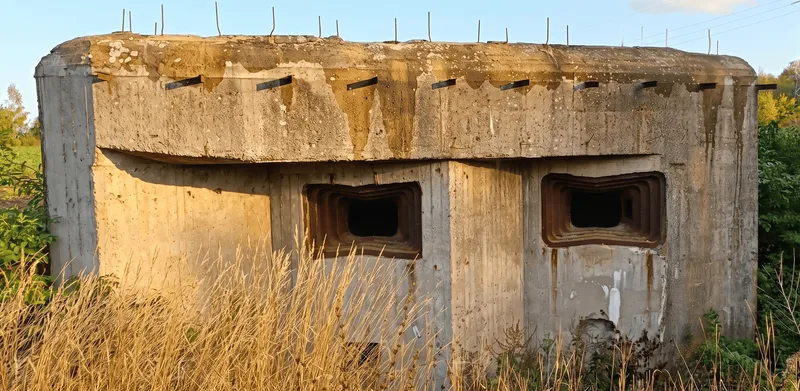
Brest Fortified Region
The Brest Fortress Fortified Region (Brest UR), forming part of the Molotov Line, was a Soviet border defense system constructed between 1940 and 1941 along the newly established western frontier of the USSR. The defensive structures were constructed according to the latest military engineering designs and reflected contemporary fortification concepts of the period. The structure of the fortified region was based on a network of permanent reinforced-concrete defensive works integrated with natural terrain obstacles and field fortifications (including . Its main combat elements included machine-gun bunkers (DOTs), artillery bunkers (APK), observation and command posts, anti-tank positions (OPPK), shelters, communication trenches, and engineering obstacles. Some sectors also incorporated obsolete tanks buried in the ground and reused as fixed firing points or improvised pillboxes, reflecting both material shortages and attempts to strengthen anti-tank defense rapidly. Defensive positions (Sstrongpoints) were organized to provide overlapping fields of fire and mutual support between strongpoints. Despite its strategic importance, the Brest UR remained incomplete by June 1941. Many bunkers lacked weapons, communications equipment, camouflage, or permanent garrisons. Some structures finished, while logistical and engineering infrastructure was only partially operational. Consequently, the fortified region had not achieved full combat readiness when Germany invaded the Soviet Union. During the opening phase of Operation Barbarossa in June 1941, elements of the Brest UR took part in defensive combat together with the defenders of Brest Fortress. Individual bunkers and fortified positions resisted German attacks, in some cases continuing isolated fighting even after encirclement. However, the incomplete condition of the fortified region and the rapid pace of the German advance prevented it from operating as a fully integrated defensive system